Daniel Debrocke : State of Health & Fitness
CLICK FOR AUDIO OF PODCAST
In fact, welcome to Trulyfit the online fitness marketplace connecting pros and clients through unique fitness business software.
Meet Daniel DeBrocke: Powerlifting Coach and Entrepreneur
Steve Washuta: Interestingly, welcome to Trulyfit. Daniel, thank you so much for joining the Trulyfit podcast again. For my listeners who didn’t hear you the first time, give a little background on who you are and what your day-to-day looks like in the health and fitness industry.
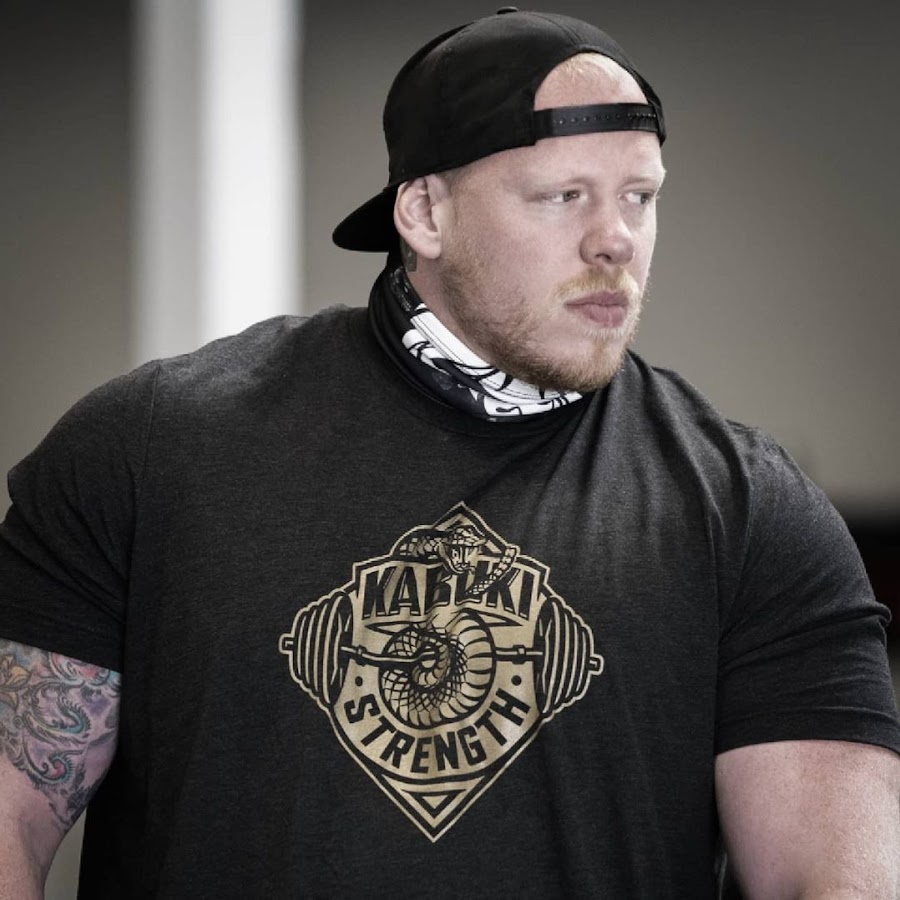
Daniel DeBrocke: Notably, thanks for having me back on — it’s been a minute, so it’s great to be here. As for who I am, I really enjoy powerlifting and strength sports. What compels me toward lifting and dieting is the process of sinking your teeth into something and seeing the fruits of it. Getting stronger, bigger, leaner. I enjoy that process of being able to actually succeed. And along the way I enjoy learning and connecting with people who are far smarter than I am. I’ve been a coach for about twelve years now. I’ve worked with some great organizations, written for some good publications, and done podcasts and speaking engagements both locally and internationally. I left Kabuki Strength, where I was director of education for about three years, in March of last year. Since then I started my own coaching company, and it’s been going quite well.
Especially recently, it’s kind of blown up, which has created a lot of new problems. But they’re good problems, so I can’t really complain.
The State of Health and Fitness: An Industry Without a Middle Ground
Steve Washuta: As it turns out, i love your socials — you have a wealth of knowledge. And there’s a million things we could talk about, from the science of lifting to form to strength training programming. I apologize that I’m going to use you for a more philosophical conversation about health and fitness today. Because selfishly, that’s what I enjoy talking about. I think that’s important for a lot of my listeners too. Your posts aren’t just “here’s the best way to do a single-arm lat pulldown”. You also talk about what’s going on in the fitness industry that you do or don’t like. And I think that matters, because we want our industry to be healthy. Right now, I think it’s very unhealthy, and I want to lay out why.
To that point, we had — or still have. An initial push from people who were so pigeonholed into thinking they had the one answer. Only eat fruit, only vegetables, only fats, only protein, only strength train, only do Olympic lifting, only do HIIT. The younger generation saw that the way you’d react if your parents’ house was full of antiques and clutter. You’d grow up wanting to be a minimalist. So these younger kids saw all the rules and said, forget it, there are no rules, eat whatever you want, do whatever you want, flexible dieting. Now we have a political-esque split: people on one end say you can only eat oranges at 4pm. And people on the other say you can eat whatever you want, doughnuts and Fritos included, and you’ll be fine. There’s no middle ground and not much of a rational voice in the industry.
Overall, do you see the same problem I do, or am I just overplaying this?
Why Polarization Happens Across Every Industry
Daniel DeBrocke: For context, you’re going to find polarization or divergence regardless of what market you’re in. Here’s the thing: a lot of people say knowledge is power, but that’s not even remotely true. If it were, people who read self-help books wouldn’t need self-help books — they’d read the book and be good to go. It’s the integration of actual knowledge into your life that matters, and the outcomes determine how accurate that information actually is. If I believe carbs make me fat. But I eat a bunch of carbs while still in a calorie deficit and I’m losing weight. Well, clearly that’s not the whole picture. So I think a lot of the time, when there’s all this information out there, people just lack general critical thinking skills. You ask someone why they believe something, and they give you a superficial answer that sounds nice.
That said, the moment you ask a follow-up question, there’s no substance behind it. I think there’s a general naivety and lack of awareness around people’s own beliefs. And a lack of desire to challenge their own perspectives. And this happens to everyone — I’m not exempt from it. This actually happened to me recently. I was having a conversation with someone, operating and behaving in a certain way. And they said, “maybe you just need to update your values.” I was like, what do you mean? They said, “you were that person, but that was years ago — are you still that person? Do you still value those things?” As obvious and as stupid as that sounds, it was a big wake-up call for me. Because I realized: no, these aren’t my values anymore, my values have changed.
But it’s easy to just keep operating under the assumption that they still apply.
Social Media as a Tool: The Alcohol Analogy
Meanwhile, i think social media has a lot of positives, but it’s a tool. And a tool that a lot of people abuse. I kind of see it like alcohol: some people use it as a celebration tool, and that’s fine. But a lot of people use it like a frat house, partying all the time and getting hammered. They scroll, get into internet beefs, and it’s super toxic. You end up internalizing sound bites that have no context, no nuance. And they erode your ability to actually think for yourself, to sit down and read a book, to be patient, to not need external stimuli all the time. I think that’s a really big problem. The literature is clear: as social media use goes up, depression, anxiety, and low self-esteem all tend to rise proportionately. The thing is, people will say the opposite.
Because there’s research showing social media use can increase self-esteem and happiness in some cases.
Survivorship Bias and the Algorithm’s Reward for Outrage
But when you really dive into it, that’s not the full picture. There’s almost a survivorship bias, where people who aren’t going to be negatively affected report positive or neutral effects. Then you see individuals with some predisposition to be negatively affected. Maybe they’re not as mentally tough or resilient — and those people experience serious side effects at times. The internet, and especially social media, rewards clickbait and controversy. It rewards people being angry and frustrated, because people engage a lot more with inflammatory comments than with anything positive. So the algorithm just feeds you more of that, because you’re engaging with it. You’re literally teaching it how to make you angry and depressed, how to serve you bad content. Again, that’s not necessarily the fault of social media, it’s a matter of incentives.
In particular, individuals who are disciplined enough can use the tool appropriately, but most people lack discipline — that’s not really in question. This is why millionaires are a rarity, and people who aren’t overweight or obese are a rarity. Obesity has actually crossed the threshold of being a bigger global health problem than starvation. This is astonishing — people are literally eating themselves to death.
Why Facts Now Feel Like Personal Attacks
Steve Washuta: Ultimately, that’s the other hard part as a health and fitness professional. Twenty-five years ago, if you were in a gym and had principles and ideologies you preached to clients, there wasn’t a lot of immediate pushback. There weren’t many other ideas floating around that seemed to contradict yours. But now it’s impossible to go on social media and not see people who contradict your ideas. Instead of saying “they have a different way of doing this. And both of our ways can work,” people feel like it’s being used as weaponry. Like, “that person said you can’t eat vegetables. And I tell my clients they can eat vegetables. So they’re attacking me.” People don’t look at information as “how should I take this in, in my own way”. They see it as an attack. And that’s a problem.
Getting Sucked Into Comment Section Arguments
Daniel DeBrocke: In fact, there’s a lot to that, and I’ve definitely been sucked into it in the past. Now, if I’m scrolling and I see one of your posts, I’ll like it, save it. And maybe share it because I want to help you out — you’re doing good work. But I don’t really engage on social media much anymore. Because I noticed that when I used to, I was someone who’s a little more susceptible to that negative spiraling. I have a temper, and certain things piss me off. I’m pretty chill for the most part, but I think that’s because I specifically manage my environment. That’s one thing I had to do. So now when people take shots at me for arbitrary things, I mostly just let it go.
If someone disagrees, or asks “well what about this,” and I’ve already addressed it in the post, I’ll just say, look, I explained it. If you’re not happy with that, we disagree, and that’s okay.
Steve Washuta: Because it’s their interpretation — you were stating a fact or a study. And for some reason they took an offensive read on it. They saw one piece and thought, “looks like Daniel’s saying you shouldn’t bench press,” or something like that. And if that person feels like that’s an important piece of their training, they get riled up because they feel attacked, when it had nothing to do with them in the first place.
How Daniel DeBrocke Learned to Handle Criticism Online
Daniel DeBrocke: Interestingly, often the people doing that, I didn’t even know existed until they commented. So it’s like — okay, be angry, call me stupid, I don’t care. I’m past the point of caring what other people think of me, partly because I’m pretty outspoken about what I believe in. If I have an opinion, I don’t shy away from it, even if it’s not popular. That said, it took time to build up that skin. Early on I was much more sensitive. I remember once, a long time ago on Facebook, I made a post analyzing IQ and heritability, unrelated to fitness. Greg Nuckols — a big name in the fitness space, and a genuinely phenomenal, helpful guy. Messaged me privately and asked if I was open to learning more about IQ, clearly in response to my post. I said yes, and he handled it like a total pro.
Responding to “I Have a Study” Arguments
Notably, he told me, bluntly, that I’d gotten it wrong, but he was gracious about it. I’ve found that the people I genuinely respect and admire never try to shut you down or call you an idiot. They’re cordial, more like, “well, what about this.” It’s respectful. Because to get to the level they’re at, they had to make at least as many mistakes as I have, if not more. Meanwhile, the people who just want to talk trash or misrepresent what you said. You look at their lives and think, what have you actually accomplished? If someone with no results is going to tell me I’m an idiot who doesn’t know what I’m talking about, I’ll ask. Show me your physique, show me your total in powerlifting. Nine times out of ten it’s the people who haven’t done anything who want to tell everyone else they’re wrong.
As it turns out, they’re just trying to validate their own ineptitude — don’t buy into that nonsense.
Steve Washuta: To that point, staying on that, Daniel — people do that with studies all the time. You’ll say something, and there’s always a study that pushes back on another study. I can find a study that says your study is wrong, and we could go study-for-study all day. A lot of times people don’t even have the studies in front of them. They’re just believing someone else’s interpretation of it, not looking at the actual conclusions themselves. How do you deal with that, when people throw “well, I have a study that says otherwise” back in your face?
Reading Research Correctly: Context Over Cherry-Picking
Daniel DeBrocke: Honestly, I almost never get that anymore, though I used to. I think because a lot of my writing is research-heavy, people don’t bother trying it as much now. When people have cited studies that supposedly contradict what I said, I’ll pull it up and ask, did you actually read this? Usually the answer is no — because either it has nothing to do with what they were arguing, or it actually supports my position. People throw around studies as if that alone is evidence. But a research paper is only one form of evidence, and often not even the best-quality evidence.
Overall, most of the highest-quality evidence isn’t actually studied yet — I’d welcome anyone to debate that. In practice, we’re not constrained by the pace of research, so we can figure things out much faster. How many studies are there on the SSB squat? Maybe five. We knew SSB squats worked for decades before there was a single study on them. If you look at everything we know about sports science, only a small fraction of it has actually been studied. That research is still valuable and sheds light on things, but you can’t take a single study in isolation. You have to look at the evidence in aggregate, ask what the aggregate data says. And how it actually applies to this specific situation.
Genetics, Obesity, and the Limits of “It’s Not My Fault”
For context, is there good evidence to the contrary, in the literature or even anecdotally? Here’s a great example: there’s research claiming there’s no relationship between technique and injury. Anyone who’s actually trained knows that’s complete nonsense. But why did the research find that? Because the relationship isn’t linear. But why would you expect it to be, given the variability between individuals in things like tissue resilience? That just demonstrates how little someone understands about injury mechanisms and individual variability, let alone everything else involved.
That said, there are doctors and PhDs — very famous people in the powerlifting and evidence-based community. Who went on podcasts shouting that technique has no relationship to injury. That’s looking at a research paper while completely ignoring real-world experience. Another example is the “obesity isn’t a choice” argument. If obesity isn’t a choice, then health isn’t a choice either, and the entire premise falls apart. There’s research cited to support that, sure — go ahead and believe it, and I’ll do my thing. And we’ll talk in five years when you have diabetes and I’m still lean. How many 500-pound 40-year-olds do you know? None, because they don’t survive that. You can’t say obesity has no bearing on health.
Poverty, Food Access, and the Cultural Roots of Obesity
Steve Washuta: Meanwhile, there are studies to “prove” it apparently, because people who are credentialed use it as weaponry. Studies you and I could easily poke holes in, and find contradictory studies for. It’s unfortunate, because people buy into it instead of trusting common sense and experience over nonsense studies. My wife, who’s a pediatrician, sat in on continuing education where someone said you can’t call people obese. That it’s like cancer, where we say “you have cancer,” not “you’re cancer,” so we should say “you have obesity.” She pushed back. Just because a study ties some genetic relation to the propensity for it doesn’t erase the fact that this is a lifestyle disease.
Daniel DeBrocke: In particular, genetics aren’t the determining factor in obesity — it’s a variable. But not the determining one, because it’s so much more driven by lifestyle. People point to socioeconomic factors, and while they’re related, they’re not reliably related, cross-culturally, to obesity rates.
Steve Washuta: Ultimately, that’s a really important point — I want you to stick on that. If you look at poverty in Africa, there isn’t high obesity in Somalia. So it’s not poverty-specific — we have to look at the actual mechanisms causing the obesity. If poverty leads to relying on food stamps, and food stamps don’t stretch to more expensive food. So you end up with worse food — I can see a cultural tie there.
Why Obesity Is Never Just One Variable
Daniel DeBrocke: In fact, there are so many variables that go into it. When people say it’s driven by one specific thing, well, it’s a variable. But not the sole driver — there are dozens of variables. Ironically, socioeconomic strata only seems to reliably correlate to obesity for Caucasian women in the U.S. between roughly 30 and 39. That’s about the only reliable predictive indicator. Outside of that, it’s not a reliable indicator, which shows it’s more complicated than just socioeconomic status. It’s relevant, but not the determining factor.
Interestingly, there’s no single determining factor for obesity — it’s a bunch of things interacting with reciprocal relationships, almost like a one-plus-one-equals-five situation. If you have overweight or obese parents, your likelihood of becoming obese growing up increases by about 12 times. If you’ve experienced sexual abuse, your likelihood of developing obesity goes up two to four times. And that scales with the number of instances; assault scales similarly, though I wouldn’t quote me precisely on those numbers. I’m confident about the 12-times figure, though I might be conflating overweight with a specific eating disorder there. So don’t quote me exactly. But there’s a lot that goes into obesity — I actually wrote an 17,000-to-18,000-word paper on it about a year ago.
Modeling Behavior vs. Genetics: What’s the Difference?
Steve Washuta: And with all health issues, it’s rarely one variable. There’s always a story with three or four or a dozen interconnected things. Which one is weighted more is where the argument comes in. Some of it’s backed by science, some of it’s just obvious. When we’re talking about obesity, if you’re more likely to be obese coming from an obese family, it’s usually not a genetic factor, it’s a cultural one. The food in the house and how they approach eating gets passed down day to day, as opposed to a genetic tie. I think that’s where people get confused.
Daniel DeBrocke: Notably, there’s a big difference between modeling behavior and genetics that people sometimes conflate. It’s funny, because even the same mechanism can have a different magnitude of effect depending on individual context. Say environment contributes roughly 15% to obesity on average, hypothetically, but it might be 45% for one person and 5% for another. The same variable can have a very different effect depending on the individual. And averages are just that — averages over a distribution, with a lot of individual variability underneath. Going back to what you said about your wife and fat-shaming. There’s actually research showing men and women respond very differently to criticism or fat-shaming. Women tend not to respond well to it; men sometimes actually show a positive effect from it, which is a controversial statement.
Defining Fat-Shaming and Why Context Matters
But then I’d ask: what’s the actual definition of fat-shaming? Throughout the literature, there’s no agreed-upon definition. It’s such a broad, nebulous term that it can include something as simple as a doctor measuring someone’s weight. So how can we claim fat-shaming is bad if we don’t even agree on what it means? Being a shitty person and shaming someone is obviously bad. And for most people it probably has a negative effect — I’m not arguing otherwise. But if you actually want to understand how to treat people, you have to be precise about what you’re defining. I’m not a rah-rah type of coach, and I’m not going to curse at my athletes. That’s just not who I am.
But if we’re at a competition and my athlete is trying to break a national or world record. And I know how they’ll respond, I might get in their face and amp them up. Because that’s what works for them in that context. Is that the right approach across the board? Absolutely not. Is it even right for that same athlete in a different context? Probably not either. Everything people do is contextual, so claiming something is universally good or bad just isn’t true. I was literally shamed out of being fat. And it had a far more positive effect on me than negative — there were residual negative effects too. But I’m grateful my friends were honest with me and, for lack of a better term, teased me into getting into better shape.
As it turns out, i’m not saying that’s the ideal solution, just that you can’t say something is universally good or bad.
Individualizing Advice for Men and Women
Steve Washuta: To that point, you hit on something important, and you said this earlier about men and women — there is a difference. Obviously we want to look at the individual and what drives them, as you said. But we have to take the differences between men and women into consideration. I see a lot of female dietitians who are all about flexible or intuitive eating. This sometimes works well for women but doesn’t work as well for men — men often need more rigidity in their plans. That’s why successful militaries have very particular training people have to adhere to, not “do whatever you want.” It gets flipped both ways too. A lot of men are too rigid with female clients who need more flexibility. We have to look at clients as individuals, but we should always factor in sex when building plans.
Daniel DeBrocke: Overall, there are definitely temperamental differences across the board, but people exist on a distribution. It’s similar to saying smaller or taller athletes can generally tolerate higher volumes, intensities. And frequencies — that’s a correct general rule, but individuals vary. I’ve coached tiny females whose training looked like a super-heavyweight’s, with lower frequency and an off-week model. Because they couldn’t handle heavy training every week. So there are real temperamental differences, and how you deal with men and women can differ on average. But that’s just a starting point. We still have to figure out who each individual actually is, refine that picture, understand their context. And adapt the information to their situation.
The Danger of a One-Size-Fits-All Ideology
Steve Washuta: For context, which is the mistake. When people have one ideology and try to force it onto everyone, instead of having multiple tools that fit the person. If I only preach intermittent fasting, I might have a client that doesn’t work for who wants to eat throughout the day, or a client who does intuitive eating but actually wants a plan laid out for them and doesn’t want to eat intuitively. I think, like you said, it’s important that we as coaches look at the person and build the plan around them, rather than mapping one ideology onto everyone.
Daniel DeBrocke: That said, at the end of the day, it’s about outcomes — is what you’re doing working? If yes, it works, that’s it. I’ve heard people say, “I never use deficits on the sumo deadlift,” and think, that’s fine, I’ve used deficits on sumo deadlifts for some of my athletes and it’s helped them tremendously. If you don’t like using something and find other things work better for you, great. But I’m using it and it’s working. People get too caught up in what other people think, or what the research says something “should” be. If something works, it works. And the more you understand why, the more you’ll notice it’s usually because the same underlying principle is driving both your results and whatever research or opinion you’re comparing it to. There’s the principle, and then there’s the application of the principle.
If you don’t understand the principle, your application stays limited to the narrow context you happened to learn it in. Having a deeper understanding of whatever you want to understand expands your ability to apply it, tenfold.
Judging Fitness Approaches by Outcomes, Not Ideology
Steve Washuta: Meanwhile, zooming out — if we don’t get into the minutiae, it’s like. If two people are both working really hard doing different exercises, they’re both likely going to reach their goal. Because they’re both working hard. If my goal is to jump three inches higher and all I do is plyometrics twice a day, done the right way. And someone else trains with you and focuses more on strength training and building musculature, we might both end up jumping two inches higher by the end of six months. That doesn’t mean one person is right or wrong — we both worked hard and got to our goals. I think there’s too much focus on minutiae and not enough on how hard people are actually working.
Daniel DeBrocke: In particular, at the end of the day, if you get the result, it’s hard to argue with it, though there are things more complicated than a single input. Take your plyometrics-versus-strength-training comparison: plyometrics will definitely help, but without a good strength base, you’re going to be constrained. Strength training alone helps too, because it increases force production and improves your strength-to-bodyweight ratio for jumping. But eventually you hit diminishing returns, where more force production doesn’t necessarily increase the rate of force production. There’s a lot more involved than that, so both approaches will take you up to a point. And then you need to change something. Two things might both be right in one instance and wrong in another, even within the same person, depending on their level of advancement. It’s definitely one of the fun parts of coaching and training — figuring all that out.
Coaching Professional Athletes: Where Steve and Daniel Disagree
Steve Washuta: Ultimately, that’s one place we disagree, because that’s part of why I wouldn’t want to coach athletes. To me, that’s not as fun. There are so many different things you could do with an athlete to make them better. Because they’re already athletes, and the challenge is finding the single best thing. If I take an 18-year-old who’s already good and wants to play hockey in college, I could literally have him do push-ups, sit-ups. And jog, and he’d probably improve just from working out. He’d get better at the sport and its skills — but what’s the actual optimal program for him? Strength training, some combination of strength and bodyweight work and cardio? Finding that recipe takes a lot of trial and error. And I think that’s why you enjoy it — but it’s not something I think I’d enjoy.
Daniel DeBrocke: In fact, that’s fair, to each their own. I enjoy it because you get to expand the scope of your capabilities. At the moment I don’t coach bodybuilders in contest prep, because I’ve never done a contest prep myself. And I don’t know the enhanced side of things — that’s not something I want to get into. I coach bodybuilders in their off-season, generally not contest prep. I have coached my girlfriend for about five years. And after her upcoming powerlifting meet in Vegas she wants to do a figure show. I told her we’d find her a coach for that. And she said, no, I want you to do it — I trust you.
Learning on the Fly: Coaching New Populations
So I’m figuring it out, and she’s going to be my guinea pig a bit. There’s a lot I don’t know, and I’ll probably make mistakes. But I think it’ll be a fun process of figuring it out and looking back thinking, “I should have done this differently.” I’ve also been talking to friends who are IFBB pros or former Olympia competitors, asking how they’d approach it. And you get so much more insight that way. A lot of the time that translates into better outcomes with athletes in areas that aren’t even directly related, just because your perspective shifts. It’s like reading a book a second, third, fourth time. Every time you extract more information, seeing it from a slightly different angle. I really like that part of it.
Steve Washuta: Interestingly, that makes perfect sense. When I used to work with older, recreational golfers, I learned so much more about the body than I’d known before. Because I had to figure out what was limiting their swing. Their lat being too tight so they couldn’t get their arms into position, or their rhomboids overworking from swinging too many times. All those little things you learn about health and fitness from working with athletes really expand your horizons.
Daniel DeBrocke: Yeah, it’s fun. It’s interesting.
Does a Coach’s Physique Prove Their Competence?
Steve Washuta: Notably, let’s go back to personal training — I want to ask a specific question. I came across a post of yours a couple of days ago where you said something like. People say you don’t need to be in good shape to be a coach or personal trainer in health and fitness. And that’s bullshit, more or less. I don’t disagree, though I don’t think it’s the highest-weighted thing. If a family member called you, Daniel. And said, “I can’t work with you, I don’t live close enough, I’m looking for an in-person trainer,” what should they look for? How would you lay out the requirements?
Daniel DeBrocke: As it turns out, what I actually said was more like, “dumb stuff that smart people say”. The idea that your physique has almost no relevance to your ability as a coach is very clearly wrong, for reasons that should be obvious.
Steve Washuta: But in 2024, people will somehow argue against that.
Daniel DeBrocke: If you say someone’s physique has no bearing on their knowledge or ability, what you’re really saying is that their experience has almost no bearing on their ability to coach. Put that in another context. You’re fresh out of med school, about to perform a complex brain surgery almost no one’s done before — go ahead. You’ve never operated on a live person, only cadavers, never had someone’s life on the line with a 50% chance they don’t make it. How’s that pressure going to affect you?
The Fighter Analogy: Pressure and Performance
To that point, put it in another scenario: you’re a fighter, first fight, trained for four years, decent boxer or kickboxer. But now you’re in front of thousands of people on live TV. If you’ve never done that, you have no idea what that pressure does. It wipes your brain, you forget who you are, you’re overwhelmed. And you’re not going to perform as well as you do in the gym. There’s so much new stimulus that you lose your patterns and repetitions. Experience clearly matters, and it matters a lot — not just experience, but experience with success. A lot of the time, when people say a coach’s physique has no bearing on their ability, what they’re implying is that education does. That education has much greater bearing on coaching ability. I’d strongly disagree; I’d say that claim is at least equally weak when applied to education.
Iatrogenic Deaths and Why Elite Athletes Become Coaches
Overall, here’s an example most people don’t know: iatrogenic deaths — a clinical way of saying deaths caused by medical care itself. Are still within the top five causes of death in America, if not the top three. We’re talking about medical doctors and nurses: highly educated, highly trained people. And patients dying not from some unavoidable long-shot outcome. But from mistakes, like prescribing a drug a patient’s chart clearly flagged as an allergy. So is education a guarantee that someone will be good? No, it’s not. It’s actually a logical fallacy — the appeal to authority. You can’t say someone’s good just because they have credentials; we see this across every industry. It’s also a mathematical reality: the Pareto distribution means it’s impossible for everyone to be equally good. Roughly 80% of the output comes from about 20% of the top performers, across every field.
As a standalone metric, I don’t think having a great physique proves much either — but it’s absolutely necessary.
For context, here’s a test: put together a list of every top bodybuilder ever created, and next to each one, put their coach. On one side you’ll have the coaches of bodybuilders who actually looked phenomenal. And on the other, the coaches of the ones who didn’t. You’ll find a couple of exceptions. But the overwhelming majority of great coaches are going to be on the “looked the part” side. You’re not getting scientists or researchers coaching Olympia-level bodybuilders — you’re getting other bodybuilders, other Olympians. Why do basketball players become basketball coaches?
Do You Have to “Look the Part” to Be a Good Coach?
That said, it’s painfully obvious, and yet it’s still disputed. I’ll often hear, “I don’t have to be jacked to be a hypertrophy coach, I have other priorities.” I’ll ask. Do you train? Yes. How often, how long, for how many years? Say, three to four times a week, an hour a session, for seven years. And you’re still not able to get jacked after that? That’s not a priorities problem, that’s a “you don’t know what you’re doing” problem. “It’s not my priority” doesn’t hold up when you’ve dedicated your career to being a hypertrophy coach. That’s just gaslighting yourself.
Meanwhile, that stuff is genuinely annoying to me. So: one, do they look the part? Two, have they helped other people look the part, or achieve whatever the relevant result is? Do they have the results you actually want, and have they helped other people get those results, and how many? What are other experts. People who are both highly educated and “in the trenches,” researchers and actual athletes both — saying about them? And a big one: how’s their communication? Do they genuinely care? I’m not going to sit here and claim I’m the best coach. But I’ll tell you I really care about my athletes and clients. Their success, their experience, their results, my reputation as a coach.
The Traits That Separate Great Coaches From Mediocre Ones
Because of that I work really hard to get them results. And they work hard too because they see how invested I am. That alone matters a lot. Someone who genuinely cares, communicates, and has walked the walk. Even if they don’t look like it anymore — is what you want. I was actually hanging out with Ben Pakulski recently. And he’s around 250 pounds now, nowhere near his competition weight of around 300. But you can see he accomplished something incredible — he was up there with Kai Greene and that whole tier. He’s got a lot of credibility, a lot of information. And a lot of other highly respected people look to him for advice. He’s gotten a lot of people to an incredibly high level.
In particular, he’s got the education, he’s walked the walk, he’s done it for a lot of other people. And he’s got real social proof from people who are themselves well educated and qualified — and he genuinely cares. Those are all really important qualities to look for in a coach. If you’re only looking for one of those things, you’re probably not going to find a good coach. There are people who really care but suck as coaches, people who are jacked but suck, people who are highly educated but suck. And people with great communication who still suck. You need a combination — and the more overlap, the better.
The Value of Communication in Coaching Success
Steve Washuta: Ultimately, that’s a good point — if you have the first four but not the communication. And you sit down with someone who isn’t listening to your problems and issues, who won’t have that two-way conversation when you want something a little different, they’re still probably not going to be a good coach. I like that you added the caveat that they’d done it at some point — that’s important too. You might find someone in their 50s or 60s who doesn’t look the part like they did 20 years ago. But they’d done it.
In fact, at least in the big sports — soccer, basketball, football. You’ll often find the best coaches weren’t the best athletes; they were near the top, but without the best genetics. And that’s exactly why they’re the best coaches: they had to work harder and do all the little things to get there. Because they weren’t born the best of the best. If you can find people who didn’t have the genetics and still made it, they usually have even more to give. Because of everything extra they had to figure out to get where their body wasn’t naturally taking them.
Boris Sheiko and What Elite Coaching Credentials Really Prove
Daniel DeBrocke: Interestingly, every time I say this, the number one response I get is, “what about Boris Sheiko?” He’s the most decorated powerlifting coach in the world. Something like 39 or 42 world champions and gold medalists among his athletes. He’s incredibly decorated, in his 60s now. Whenever people bring him up, I ask, “you mean the guy who was on the Russian national team when he was younger, a genuinely solid competitive athlete?” Most people don’t even know that about him. I don’t have crazy genetics for strength myself — I have to work really hard. For me to squat 800 pounds is probably another five years away, just because I don’t have the genetics for it. Do I work harder than anyone else? I don’t think so — everyone at my gym works incredibly hard. I can’t claim I outwork everyone, but I know I work really hard.
And a lot of people outpace me anyway because of genetics, and there’s nothing I can do about that. So I just have to be patient, stay injury-free, keep getting bigger, and eventually I’ll get there.
Introducing the Steroids and PED Conversation
Steve Washuta: Notably, speaking of working hard, let’s move to steroids — a hot topic across fitness and health. My big-picture issue is that people on performance-enhancing drugs sometimes neglect to talk about what I think is the most beneficial part. The psychological piece — extra drive, extra motivation, extra will. If you poll the general public and ask why they only went to the gym once this week, the number one answer is “I didn’t have the motivation.” PEDs really help with that drive and motivation to show up, forget even the physiological benefits. But that’s sort of hidden. A lot of people in the industry don’t make that known. They’ll just say “you need more drive, more motivation.” If you’re on 600 milligrams of test a week, you have a level of drive that some other 42-year-old with low testosterone doesn’t have. Am I wrong?
As it turns out, is that something the strength community hides, and how do you see it?
TRT, PEDs, and the Blurred Lines in Modern Fitness
Daniel DeBrocke: To that point, i’ve genuinely never thought about that, and haven’t noticed it either. If I had to guess, I’d suspect the people willing to take copious amounts of drugs are probably already more serious about training to begin with. I’m not talking about a 17-year-old who’s never lifted jumping on a cycle. I’m talking about guys who were already serious before. Because those are really the only guys I’m exposed to — I don’t train at a commercial gym. So I train with pretty high-level guys, most of them natural. And the ones who aren’t were very serious about training beforehand already. I think it’s more a selection-bias issue. The people who are more motivated and dedicated are also more willing to push the envelope and use drugs. I honestly don’t know what effect it has on motivation itself, but that’s my guess as to the relationship.
Steve Washuta: Overall, your community is pretty specific, so let me widen it beyond powerlifters and bodybuilders. I mean more like the 46-year-old guy on Instagram who wakes up at 4am, works out twice. And talks about not having enough motivation. The Mark Wahlberg types of the world — like, you’re 48 but you’re on TRT. This is why you have additional motivation the average person doesn’t have.
Daniel DeBrocke: So to clarify. Are you asking about the difference between general PED use versus TRT for someone with clinically low testosterone specifically?
Testosterone, Motivation, and the Deficiency Argument
Steve Washuta: For context, tRT use these days isn’t just about low T anymore — the threshold for what counts as “low T” has dropped. So you can be in your late 30s, any doctor will call you low T. And your levels on TRT end up higher than they were in your 20s. It’s being used as performance-enhancing, just not for sport — for life.
Daniel DeBrocke: If you have low testosterone and then take testosterone, your motivation is definitely going to go up, along with your sense of self-esteem. Low T is essentially a precursor to a disease state. Your cardiac risk goes up, your mortality risk goes up exponentially, along with a lot of other things. Especially over time, since some of these risks are measured over extended periods, relative to how long you’re exposed. So if that’s the situation, TRT is going to make a real difference. If someone with normal, healthy testosterone levels takes TRT on top of that, I could maybe see a small boost in motivation. But I’m honestly not sure. The clearest case is the deficiency one — if you’re actually low, it’s going to make a difference.
Motivation vs. Purpose: What People Actually Lack
That said, outside of that, I’d say people who feel like they lack motivation often actually lack purpose more than motivation. Everyone is motivated to do something. There’s a motivational hierarchy behind everything we do; even deciding to sit versus stand is a decision driven by some intrinsic motivation. If someone says they lack motivation, I’d say they lack some sort of purpose. I don’t really buy the “lack of motivation” framing — are you motivated to show up at work every day? No, but you do it. Are you motivated to pick your kids up at night, or get up at 3am for a crying newborn? You’re not pumped about it, but you do it because you have to. Your motivation to do that is greater than your motivation to neglect your child, because there’s a bigger purpose behind it.
Meanwhile, a lot of the time when people talk about motivation, they don’t actually understand what it is. It’s a fairly expansive topic. If someone lacks motivation, I’d say what they actually lack is direction, purpose, and clarity.
Ozempic as a Catalyst, Not a Shortcut
Steve Washuta: In particular, that’s a great point. People say “I don’t have the motivation to go to the gym” — but is that really it. Or are you just low energy and choosing to do something else because of it? What I try to explain to clients. And I’m sure you’d echo this, is that the more you lift, the more energy you have to lift. There’s this moment you get to, usually a few weeks or months in, where it’s difficult at first. Like picking up a book for the first time in years, thinking “I have to get through this whole thing.” Then you get through one or two and realize it’s actually easier. And you gain momentum. So part of the conversation with a client is: I know you don’t feel like you have the energy.
But we have to push through the first three weeks, and then you’ll gain it.
Daniel DeBrocke: Ultimately, it’s funny, I don’t think you ever notice exactly when that shift happens. But at some point you have a moment where you realize you don’t really enjoy eating bad food anymore. Not because of the taste, but because when you do, you just feel bad. You feel inflamed, your face and joints puff up, it doesn’t feel good for training. You’d genuinely rather eat healthy food and go do your training. It’s not even “I don’t want to,” it’s more like, if I feel this way now, I’ll feel worse tomorrow. So I have to go. It’s funny because you cross that threshold without realizing it until weeks or months later. And then you have one of those “huh” moments. I remember struggling at restaurants, and now I don’t really have those cravings anymore. It’s a cool process.
Being Authentic on Social Media vs. Performing
Steve Washuta: In fact, that’s part of why I’m not necessarily against people using something like Ozempic as a catalyst, though there are some concerning studies now around gastroparesis and similar issues. So I don’t want to single that one out specifically. But the idea of using something — a pre-workout, a supplement, a catalyst to get moving — if that’s what gets someone started, I’m fine with that for the first three or four weeks, as long as there’s a plan and it’s not meant to be a lifelong crutch. So again, I won’t specifically endorse Ozempic given the health concerns around it, but the idea of a catalyst, whether that’s TRT or something else that gives you an initial burst of momentum to get past that first hurdle, I’m all for it.
Daniel DeBrocke: Interestingly, sure, why not — these things are all just levers.
Steve Washuta: Notably, last thing — I want you to close with your philosophy about just posting what you actually think. A lot of people in health and fitness struggle to find their voice on social media, hide parts of themselves or act like a different character. You seem pretty authentic, and just say what you mean. Did it take a while to get there? Do you find it’s more beneficial to just be yourself, or is this just who you are and you couldn’t see it any other way?
Why Daniel DeBrocke Stopped Filtering Himself Online
Daniel DeBrocke: As it turns out, i think about that a lot. I’ve always been that way — I just kind of speak my mind. And I think that’s a family trait, maybe partly a cultural difference between Canadians, Americans, and other cultures. I’ve always been like that in real life. I don’t think I was always like that on social media, though. I was pretty late to it — I got my first cell phone at 22 or 23. So when I first started posting, looking back, I think I was trying to sound smart. I’d see guys like Greg Nuckols, Mike Israetel, Eric Helms, all these smart people posting things and think, that’s really cool. I’m a fairly cerebral person, so I assumed I should do the same and tried to model them. People would tell me the content was good, but I was always so careful about how I worded things.
To that point, eventually I thought, this isn’t me, this isn’t how I’d actually respond in real life. The content was accurate, but it just didn’t feel like me.
Authenticity Builds a Better Audience
Overall, i’m not totally sure what shifted. But at some point I thought, forget it, I’m just going to be who I actually am, and I started doing that. I take heat for it now and then, but honestly, who cares. Why would I justify my existence or beliefs to someone I don’t even know? I have a lot of controversial opinions, and that’s okay. Though when I go back to Serbia, none of what I’m saying is even controversial there. I don’t believe people can actually get “canceled”. You can hate on me on social media, so what, go ahead and cancel my account. I don’t give a shit. Am I going to sacrifice my integrity and who I am to keep Instagram? If that’s someone’s priority, they can go elsewhere — I don’t want to deal with people like that, honestly.
Steve Washuta: For context, i think more people worry about getting “canceled” on Instagram, or about losing friends who are diagonally connected to people who disagree with them, than about actually losing something real. But both in the real world and online, eventually your thoughts are your thoughts. You’re not going to keep curating a fake internet persona forever. That is you, those are your thoughts, that’s who you are. And the sooner you give into that, the more authentic an audience you build, I believe.
What to Say to People Worried About Losing Friends
Daniel DeBrocke: That said, here’s what I’d say to people worried about losing friends over this. If you’re worried about pissing someone off by being honest, that makes you a liar, that makes you disingenuous. Now, to be clear: if you have a business, run your business. I’m not saying everyone has to speak on political issues. I actually stopped doing a lot of that myself; I just don’t argue about it, that’s my fitness business. But I’m okay talking about controversial stuff within the scope of my business. I’m not saying you have to do that either, but I’m never going to lie about who I am. If someone says “I don’t want to say this because…” I’d ask: do you believe it? If yes, then why not act like you actually have a backbone and stand by your convictions instead of pussyfooting around it?
Otherwise you’re just a coward, and I honestly can’t stand that.
Why Losing the Wrong Followers Is a Good Thing
Meanwhile, here’s what happens when you do speak up: some people will walk away. And good — you just found out they weren’t actually your friends. You don’t want those people in your life anyway. And then what happens? You start attracting people who actually share your values. Isn’t that so much better than faking it, than pretending to be someone else? Isn’t it better to actually express who you genuinely are and say, this is who I am, I don’t need you to accept me? I know who I am. If you don’t like it, that’s fine — plenty of people don’t like me anymore, and I have no problem with that. I’m not apologizing for who I am. This isn’t a license to be a jerk to everyone, though — don’t be a piece of garbage. But if someone disagrees with me or doesn’t like me, that’s okay.
In particular, i don’t need people to like me. I’ve got three people I’m really, really close with. My best friend, my sister, my girlfriend — and that’s all I need.
Real Friends vs. Social Media Critics
Ultimately, i don’t need a million people to like me. If I know I’m doing right by the people I care about. My future family, when I get married and have kids — that’s what I care about. I don’t care what some stranger on the internet thinks of me, especially if they don’t have what I want. If someone’s criticizing me and I look at their life and think, you’re working a construction job — nothing wrong with construction. But I wouldn’t want to do it. And you’re not making a very smart argument here, why would I listen to you? I’d never trade places with you; your mindset and your ability to think and execute got you to that position. So why would I trust anything you say? That’s not the outcome I want.
Steve Washuta: Right — the people who actually care about you, like in your first example with Greg reaching out after your Facebook post, will reach out with a genuine hand and say, hey, I’d like to talk about this, I disagree. Or here’s something to consider — they won’t attack you. If people are attacking you, they’re not your friends, because real friends have a real conversation about what they disagree with.
Staying Gracious Under Criticism
Daniel DeBrocke: 100%, and for me, I try to stay pretty gracious generally, until someone starts being a jerk to me. I had so many people — like I mentioned with Greg reaching out privately, which was really cool. And I haven’t forgotten that, because he was already a big name back then. He didn’t have to do that — he could have just torn me apart in the comments, but he didn’t. That’s a good dude, and I try to do the same for other people, not be a jerk. But at the same time, why would I care what some guy who can’t handle his emotions on social media thinks about whether you should do 15 or 20 sets for a muscle group? I just don’t care. If you disagree, disagree — that’s fine.
Steve Washuta: In fact, daniel, this has been fun and great information. I promise I’ll have you back to talk about more concrete, powerlifting-specific stuff instead of this philosophical, cultural conversation. But let my listeners know where they can best reach you individually, and where they can find your socials.
Where to Find Daniel DeBrocke: Instagram and YouTube
Daniel DeBrocke: Interestingly, thanks for having me on, man, I appreciate it — I hope your audience got something out of it. I’m not necessarily the best guy to wax poetic about things, so apologies for all the cursing. And if some of what I said didn’t fully make sense — that’s not exactly my area of expertise. But I appreciate you having me on, and I always enjoy the chat — great to connect again. I’m most active on Instagram; I have other social media. But Instagram is really the only one I have time for right now since I’m so busy with work. It’s Daniel_DeBrocke, and I also have a YouTube channel. I’ve got a couple hundred videos up there, and I’ll be posting more lectures soon. I recently hired a video editor and have another budget lecture coming.
So those are the two places to find a lot of content, but Instagram is the best place to actually reach me.
Steve Washuta: Notably, i’ll put all the links in the description — he’s a great follow, make sure you check him out. My guest today has been Daniel DeBrocke, thank you for joining us — really good podcast. Thanks for joining us on the TrulyFit podcast. Please subscribe, rate, and review on your listening platform — feel free to email us, we’d love to hear from you.
As it turns out, Social@Trulyfit.app
To that point, thanks again!
Overall, https://linktr.ee/daniel_debrocke
CLICK FOR AUDIO OF PODCAST
If you want to hear Daniel DeBrocke’s first appearance on the podcast, where he goes deeper into his time as Kabuki Strength’s Director of Education, check out this blog: Daniel DeBrocke: Kabuki Strength Director of Education.